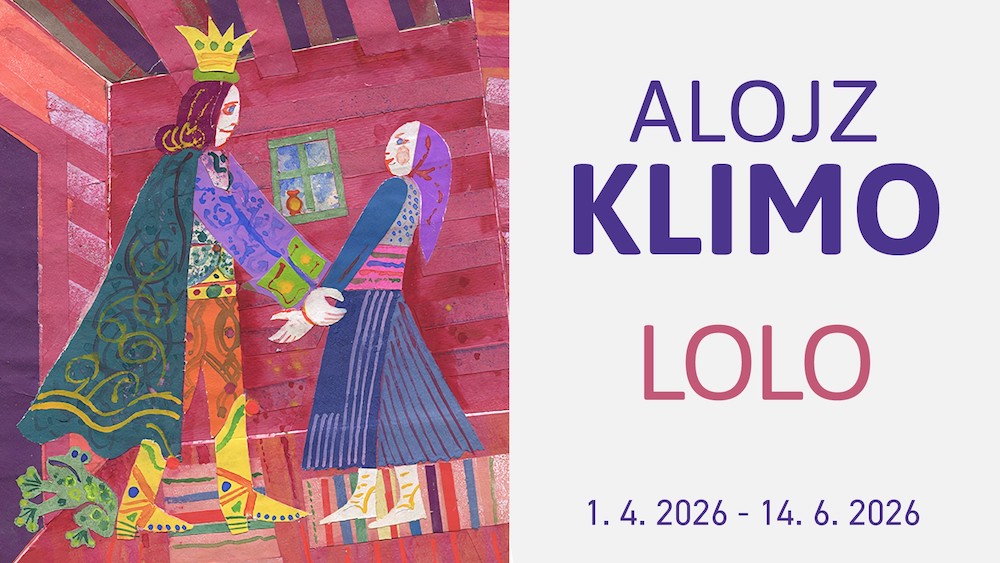
The Danubiana Meulensteen Art Museum invites you to the exhibition “Alojz Klimo: LOLO – Between Painting and Illustration,” running from April 1 to June 14, 2026.
In what ways did Klimo excel in the field of illustration?
It was his original artistic approach to illustrating children’s books. He chose collage as his medium—a technique that, while not new (modern art had been using it since Cubism), was very rarely employed in our country. From the very beginning, he gravitated toward a highly simplified artistic form that did not slavishly adhere to the depiction of details.
He uses roughly and irregularly cut and torn paper, from which he assembles forms with only approximate outlines. Humorous and grotesque interpretations also play a role here, such as the way he highlights eyes and limbs… He places greater importance on color. He allows patches of color to bleed on the paper, thereby achieving rich color layering. The aspect of color most closely links his illustrations with his free-form work. Even in his paintings, he uses a method of applying paint to an unprimed canvas covered with paper, which causes the paint to bleed.
The exhibition commendably highlights Alojz Klimo’s exceptional standing in Slovak modern art, including through his sometimes underappreciated illustrations for children’s books.
Eva Trojanová
Alojz Klimo (1922–2000). He first studied (from 1941 to 1945) at the Technical University in Bratislava in the Department of Drawing and Painting, and immediately afterward, until 1948, at the Academy of Arts, Architecture and Design in Prague. He was not only an illustrator; in fact, his works are better known for their abstract, geometric-constructivist style. He also devoted himself to graphic art, monumental works, and the creation of spatial objects and toys. He illustrated nearly sixty books and picture books for children, such as Kristy Bendová’s Čačky hračky, Božena Němcová’s Kráľ času, and Jaroslava Blažková’s Ohňostroj pre deduška, as well as the book of folk lullabies Beliže mi, beli and Jozef Pavlovič’s Generál Guľôčka.
He was not afraid to incorporate abstraction, geometric constructions, various symbols and subtexts, and references to folk art into his illustrations. He often used colored collage as a technique, which creates a sense of mass in his images and adds volume to the perspective. His daughter Tamara Kolenčíková said of his collages: “He did it with a kind of knife, but it was different from today’s cutters—it was a curved blade. That’s why the edges remained so vivid.”
Curators: Eva Trojanová, Miloš Kopták, Mária Rojko, Ida Želinská
The exhibition was created in collaboration with TOTO! je galéria
Location: Danubiana Meulensteen Art Museum, Čunovo, Slovakia
Date: from 01. 04. 2026 – 14. 06. 2026
Opening hours:
Monday – closed
Tuesday – Sunday from 10:00 am – 6:00 pm
Entrance fee:
Adults – 12 €
Family (2 adults and 2 students) – 25 €
Pensioners (over 62 years old) – 6 €
Students – 6 €
Children (under 6 years old) – Free
Members of the Danubiana Club – Free
Disabled persons, persons over 75 years old – Free
Here you will find all tips for EVENTS BRATISLAVA.
 Article
Top things to do in June in Bratislava. What to do in Bratislava? World-renowned legends, fencing duels, and sports for kids. Bratislava has it all th…
 Article
Top things to do in Bratislava this weekend. Eventland brings you the best events today, this weekend in Bratislava, food fests, concerts, parties, ma…
 Article
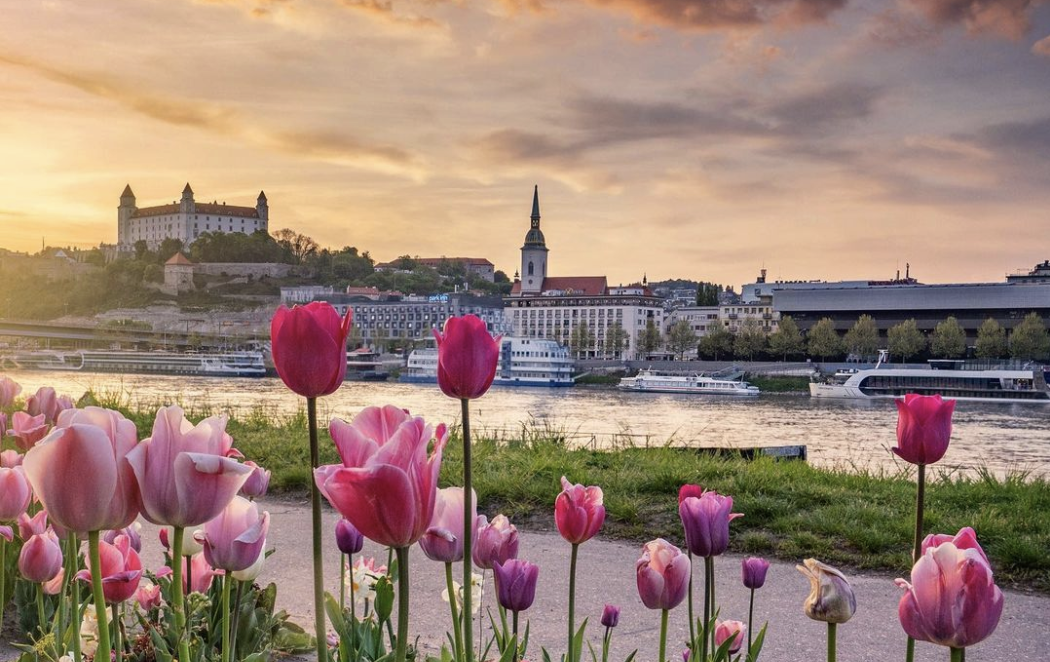
Where to go in Bratislava in May? The most beautiful month of spring is here, and with it come plenty of events, markets, festivals, concerts, activit…
 Article
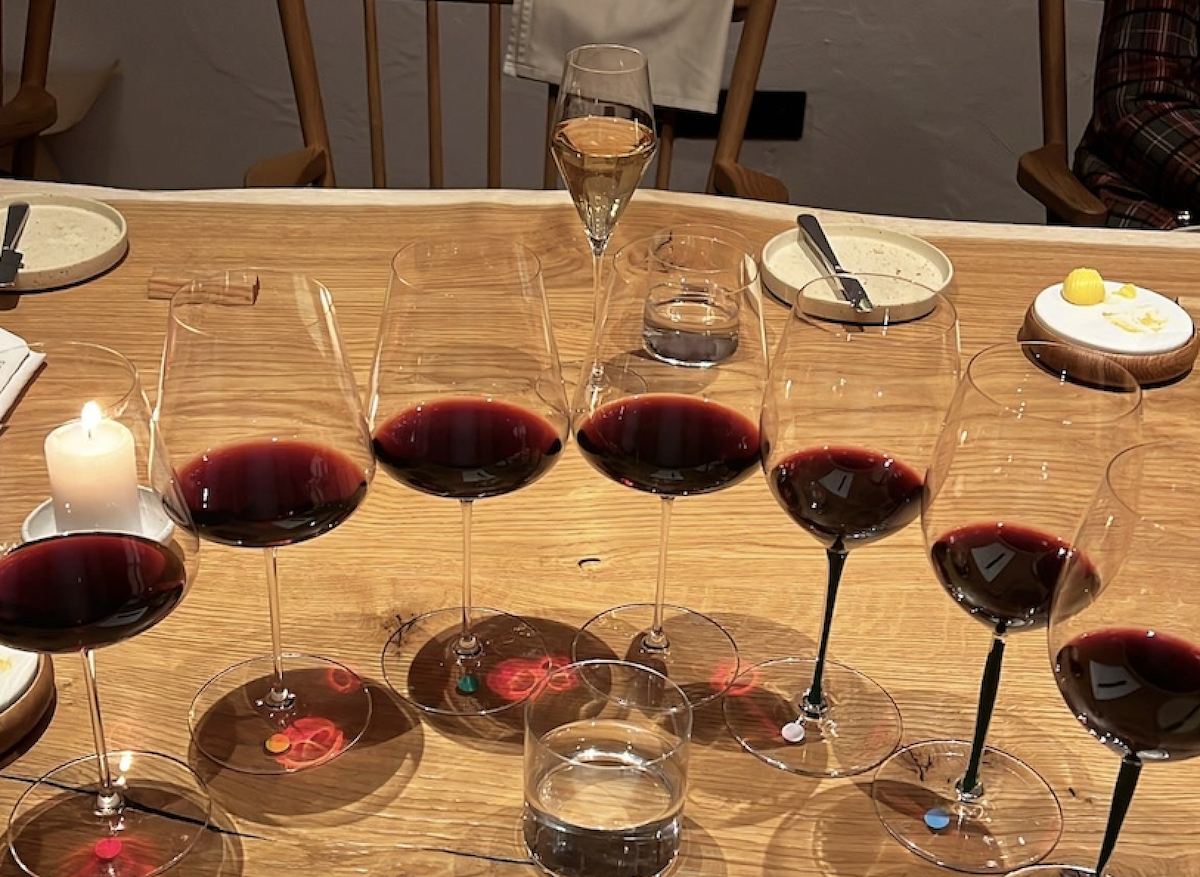
If you fancy a glass of good wine, you have several options to choose from. Bratislava has taken over from Prešpork, which was known for its wineri…
 Article
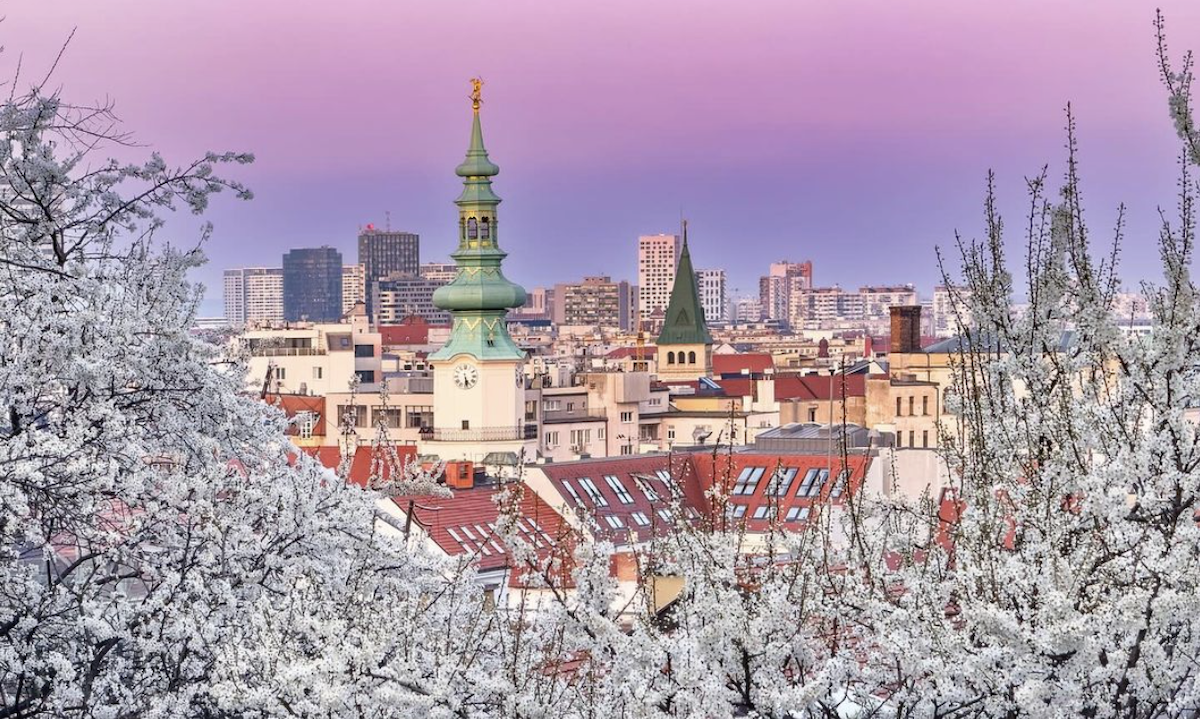
Top things to do in Bratislava in April. Eventland brings you the best events, activities happening in April in Bratislava – Bratislava City Day…
 Article
What to do in Bratislava in March? The first month of spring brings many events for families with children, entertainment, festivals, sporting events,…